Stop Gutter Problems Before They Become Costly Home Damage
Stay informed with expert tips, helpful advice, and the latest trends in the roofing industry from the Gibbs Team
Stop Gutter Problems Before They Become Costly Home Damage
Your roof is designed to protect your home from rain, wind, and changing weather conditions, but your gutters play an equally important role. They collect rainwater from the roof and direct it away from your home’s walls, foundation, landscaping, and walkways.
When gutters become clogged, cracked, sagging, or disconnected, water can overflow and create problems throughout the property. What may begin as a small gutter issue can eventually contribute to soil erosion, landscape damage, basement moisture, foundation concerns, and even roof deterioration.
Professional gutter repair can help restore proper water flow and protect your property before a minor problem turns into an expensive repair.
Why Are Gutters Important?
Gutters are part of your home’s overall water-management system. During rainfall, they collect water flowing from the roof and move it toward downspouts.
Without properly functioning gutters, water may fall directly against the exterior walls or collect around the foundation.
Effective gutter systems can help:
- Direct rainwater away from the foundation
- Reduce soil erosion
- Protect landscaping
- Prevent water from pooling around the home
- Reduce exterior wall staining
- Protect walkways and patios
- Support proper roof drainage
- Help minimize moisture-related problems
Keeping the system in good condition is therefore an important part of routine home maintenance.
Common Signs You Need Gutter Repair
Gutter problems are not always immediately obvious. Some issues only become visible during or after heavy rainfall.
Here are several warning signs to watch for.
Water Overflowing From Gutters
If water pours over the sides instead of flowing toward the downspouts, the system may be clogged, damaged, improperly pitched, or undersized.
Sagging Gutters
Gutters should maintain a consistent slope toward their outlets. Sagging sections can prevent water from flowing correctly and may indicate damaged hangers or fasteners.
Cracks or Holes
Small cracks can allow water to escape before reaching the downspout. Over time, these openings can become larger.
Separating Seams
Sectional systems may develop gaps at their joints. Water escaping through seams can stain siding and contribute to moisture problems.
Loose or Detached Sections
Heavy rain, wind, ice, falling branches, and age can cause sections to pull away from the roofline.
Water Pooling Near the Foundation
If downspouts are not directing water far enough away from the home, rainwater may collect around the foundation.
Rust or Corrosion
Older metal components can deteriorate and eventually develop holes or weak areas.
What Causes Gutter Damage?
Several factors can affect gutter performance and condition.
Severe Weather
Heavy rain and strong winds can put additional stress on gutters and their supporting components.
Falling Branches
Branches can strike or deform the system, while leaves and debris can create blockages.
Poor Installation
Incorrect slope, inadequate fastening, or poorly positioned downspouts can lead to drainage problems.
Age
Gutter materials naturally deteriorate over time. Sealants can fail, fasteners can loosen, and metal may corrode.
Ice and Freezing Conditions
Freeze-and-thaw cycles can place additional stress on joints and mounting points.
Lack of Maintenance
Leaves, pine needles, twigs, and other debris can accumulate and prevent water from moving efficiently.
Why Prompt Repairs Matter
It is easy to postpone a small gutter repair, particularly when the system still appears to function during light rain.
However, minor defects can become more serious over time.
A small crack can expand. A loose section can detach completely. A blocked downspout can cause water to overflow against the roofline or exterior wall.
Addressing problems early may help prevent more extensive damage and reduce the likelihood of needing larger repairs later.
Gutter Repair vs. Gutter Replacement
Not every damaged gutter needs to be replaced.
Repair may be appropriate when the overall system remains in good condition and the problem is limited to a specific section, joint, fastener, hanger, or outlet.
Replacement may make more sense when the system has widespread corrosion, extensive damage, repeated failures, or significant structural deterioration.
A professional inspection can help determine which option provides the better long-term solution.
Factors to consider include:
- Age of the system
- Extent of damage
- Material condition
- Number of damaged sections
- Fastener condition
- Downspout performance
- Roof drainage requirements
- Previous repairs
How Gutters Protect Your Foundation
One of the most important functions of a gutter system is directing water away from the foundation.
Without effective drainage, roof runoff can fall directly beside the house. Over time, repeated exposure to large amounts of water may saturate the soil around the foundation.
Depending on the property’s grading and soil conditions, water may eventually find pathways toward basements or crawl spaces.
Properly positioned downspouts and appropriate extensions can help move water away from the structure.
However, gutters are only one part of foundation water management. Proper grading, drainage systems, waterproofing, and other measures may also be necessary depending on the property.
Protecting Your Landscaping
Rainwater can also damage landscaping.
When water repeatedly pours from a roof edge without proper collection, it can wash away mulch and topsoil, expose plant roots, create muddy areas, and damage flower beds.
A functioning gutter system helps control where roof runoff enters the yard.
This can make it easier to maintain landscaping and reduce erosion around the property.
The Importance of Downspouts
Gutters can only work effectively when downspouts are functioning properly.
Downspouts carry collected water from the roofline toward the ground and away from the structure.
Common downspout problems include:
- Clogs
- Loose connections
- Cracks
- Improper positioning
- Insufficient extensions
- Discharge too close to the foundation
If your gutters appear clean but water continues to collect around the house, the downspout system may need attention.
How to Keep Your Gutters in Good Condition
Regular maintenance can help identify problems before they become major repairs.
Clean Out Debris
Leaves, twigs, pine needles, and other debris can block water flow. Cleaning should be performed periodically, particularly during seasons when trees shed heavily.
Check the Slope
Gutters should direct water toward the downspouts. Sagging areas can interfere with drainage.
Inspect Fasteners
Loose screws, hangers, and brackets can cause sections to pull away from the home.
Look for Leaks
Inspect seams, corners, and joints for water stains or visible openings.
Examine Downspouts
Make sure water flows freely through the downspouts and discharges away from the foundation.
Schedule Professional Inspections
A professional can identify issues that may be difficult to see from ground level.
Why Professional Gutter Repair Is Worth Considering
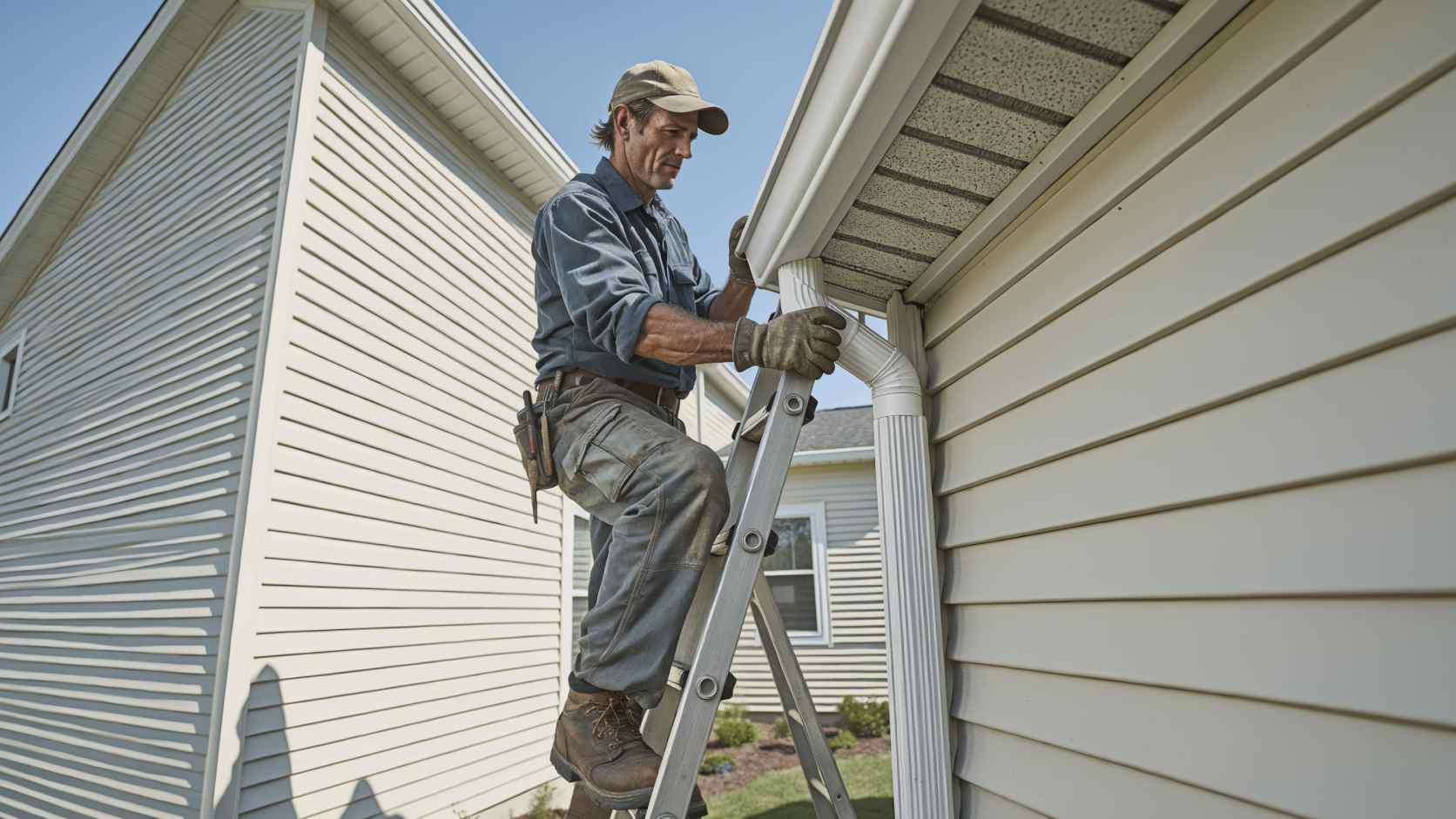
Gutter repairs may look simple, but working around roof edges and elevated areas can involve safety risks.
Professionals have the appropriate equipment and experience to inspect the entire drainage system rather than addressing only the most obvious problem.
They can also determine whether the issue is caused by the gutter itself or another part of the roof drainage system.
For example, overflowing gutters may result from a blockage, but they can also be caused by improper pitch, insufficient capacity, or a downspout that cannot handle the volume of water.
Identifying the actual cause is essential for a lasting repair.
Gutter Maintenance and Roof Protection
Gutters and roofing work together to manage rainfall.
A damaged or clogged gutter can allow water to remain near roof edges or overflow onto roofing and exterior surfaces.
Maintaining both systems can help protect the overall building envelope.
Homeowners should pay particular attention after storms. Strong winds can loosen gutter sections, while branches can cause impact damage.
A post-storm inspection can help identify problems before the next major rainfall.
When Should You Call a Professional?
Consider scheduling an inspection if you notice:
- Persistent gutter overflow
- Water pooling around your home
- Sagging sections
- Visible cracks
- Rust or corrosion
- Detached gutters
- Damaged downspouts
- Water stains on siding
- Erosion beneath the roofline
- Repeated gutter problems
You should also consider professional evaluation if your gutters are difficult to access safely.
Choosing a Gutter Repair Contractor
When selecting a contractor, look for experience with roofing and water-management systems.
A qualified professional should inspect the complete gutter system and explain the cause of the problem before recommending repairs.
Ask about:
- The source of the damage
- Recommended repair method
- Materials being used
- Downspout condition
- Expected repair lifespan
- Maintenance requirements
- Whether replacement is necessary
Avoid choosing a contractor based solely on the lowest price. A properly completed repair should address the underlying problem rather than simply cover up visible damage.
Cracked, sagging, clogged, or overflowing gutters can put your home at risk every time it rains. Professional gutter repair can restore proper drainage and help protect your roof, siding, landscaping, and foundation.
Don’t wait for a small gutter problem to become a major water-damage issue. A professional inspection can identify damaged components and determine whether repair or replacement is the right solution for your property.
Frequently Asked Questions
1. How do I know if my gutters need repair?
Common signs include overflowing water, sagging sections, visible cracks, rust, loose fasteners, detached components, and water pooling near the foundation.
2. Can damaged gutters cause foundation problems?
Poorly functioning gutters can allow large amounts of water to collect near the foundation. Depending on soil, grading, and other conditions, this may contribute to moisture-related concerns.
3. Should I repair or replace my gutters?
Repair may be suitable when damage is limited to certain areas. Replacement may be more appropriate when the system has widespread deterioration or repeated failures. A professional inspection can help determine the best option.
4. How often should gutters be cleaned?
Cleaning frequency depends on the surrounding trees, roof type, climate, and amount of debris. Many homes benefit from cleaning at least twice a year, while heavily wooded properties may require more frequent attention.
5. How far should downspouts direct water from the house?
Downspouts should discharge water far enough away from the foundation to prevent pooling. The appropriate distance depends on grading, soil, drainage conditions, and local property requirements.
Conclusion
Your gutter system is an important part of protecting your home from rainwater. When gutters are damaged, clogged, or improperly draining, water can affect the roofline, exterior walls, landscaping, and foundation.
Regular inspections and timely repairs can help keep water moving where it belongs. Whether you are dealing with a leaking seam, sagging section, damaged downspout, or recurring overflow, identifying the underlying cause is the key to an effective solution.
Professional gutter maintenance can also help extend the useful life of the system and reduce the risk of preventable water-related damage.
For homeowners looking for dependable gutter repair and roofing support, Gibbs Roofing in GA can help assess gutter problems and recommend an appropriate solution for your property.