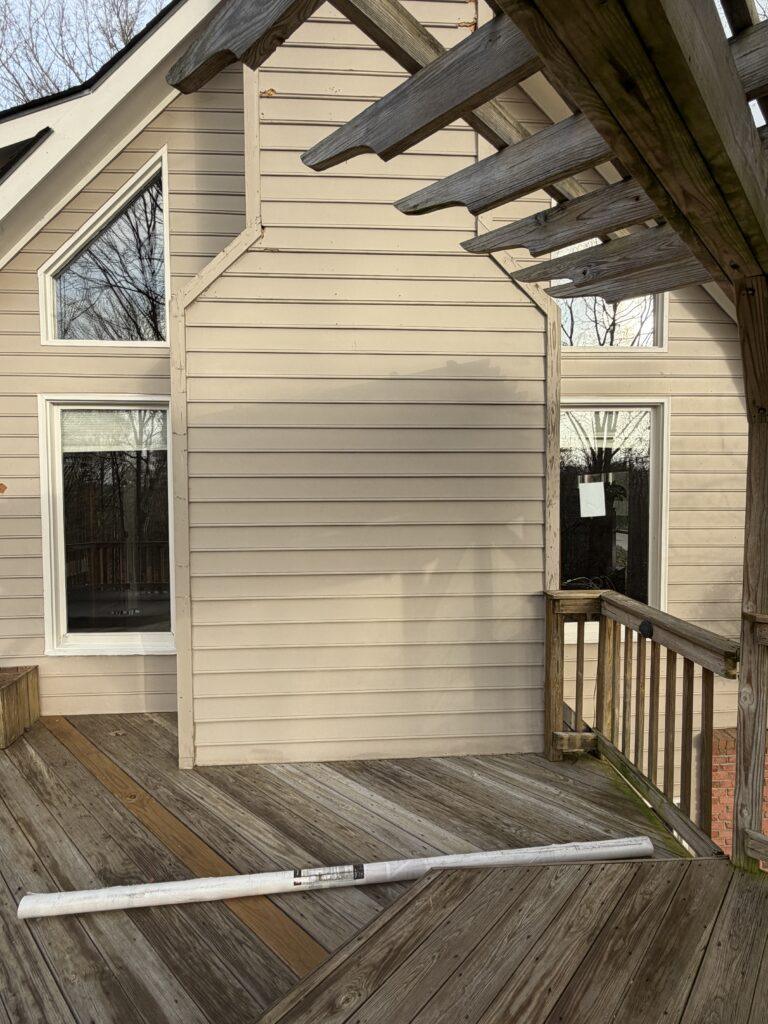
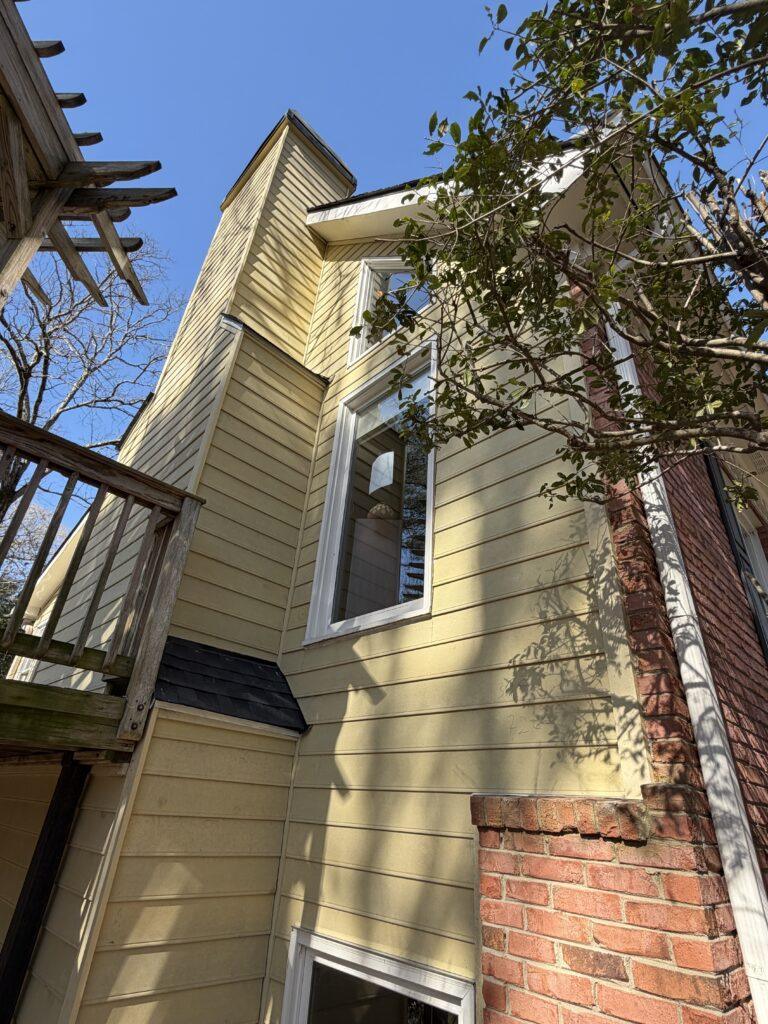
The right repair method depends on the material, the age of the installation, and the type of damage. Our siding repair services cover vinyl, fiber cement, wood, and composite systems. For vinyl, our crew uses a zip tool to unlock the course above the damaged piece, removes it without disturbing the panels around it, and completes the vinyl siding panel replacement with a matching profile and correctly centered nailing that allows for thermal movement.
Replacing damaged vinyl siding this way keeps the wall watertight and avoids the buckling caused by overdriven fasteners. Hardie siding repair and other fiber cement siding repair work uses scored breaks or fiber cement blades, with fastening that follows manufacturer specifications so new boards do not crack during installation. Warped siding repair is handled differently again, because heat distortion and moisture swelling usually mean the affected boards are replaced rather than reset. Most siding panel replacement of this kind is completed in a single visit when materials are available. For material-specific guidance, see our vinyl siding page.
Seams around windows, corners, and trim transitions need particular attention, because Georgia’s seasonal humidity and heavy rain cause failures there first. Siding caulk repair starts with removing deteriorated sealant, inspecting the flashing and j-channel underneath, replacing damaged trim components, and applying new sealant that forms a durable weather barrier.
Siding leak repair sometimes requires opening the wall when water has already reached the house wrap or sheathing, and in those cases we coordinate with our weatherproofing services team to restore the moisture barrier before the wall is closed back up. Finished repairs are matched as closely as possible to the existing panel color, texture, and profile. As the Vinyl Siding Institute recommends, color and texture matching is critical to maintaining a uniform exterior after repairs. To see how siding work connects with the rest of the roofline, review our soffit and fascia services or read our home exterior tips blog.
- Zip tools allow vinyl panel removal without damaging the surrounding course
- Fiber cement and Hardie board repairs require scored cuts and controlled fastener torque to prevent cracking
- Deteriorated caulk at seams must be fully removed before new sealant is applied
- Loose siding repair usually involves re-securing nail hems and replacing failed or backed-out fasteners
- Broken siding panels are replaced outright, since patching rarely holds a weather seal
- Water-damaged siding and any affected sheathing are addressed before new panels go back on